publications
publications by categories in reversed chronological order. (*) denotes equal contribution.
2026
- ICLR 2026
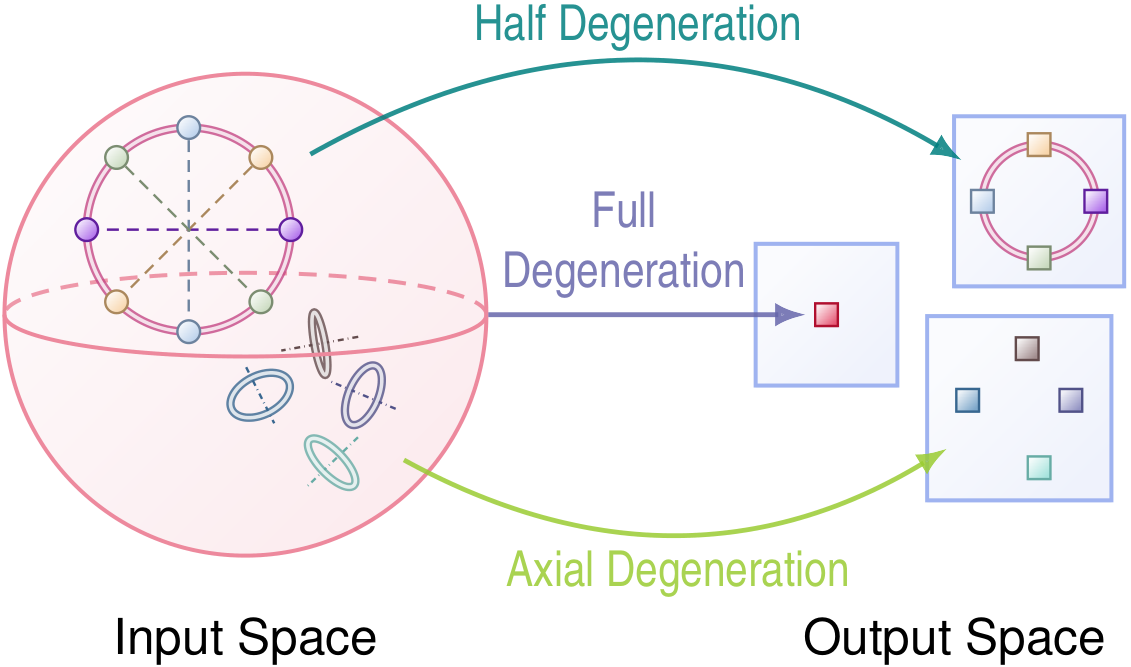 Reducing Symmetry Increase in Equivariant Neural NetworksNing Lin, Jiacheng Cen, Anyi Li, Wenbing Huang, and Hao SunIn The Fourteenth International Conference on Learning Representations, 2026
Equivariant Neural Networks (ENNs) have empowered numerous applications in scientific fields. Despite their remarkable capacity for representing geometric structures, ENNs suffer from degraded expressivity when processing symmetric inputs: the output representations are invariant to transformations that extend beyond the input’s symmetries. The mathematical essence of this phenomenon is that a symmetric input, after being processed by an equivariant map, experiences an increase in symmetry. While prior research has documented symmetry increase in specific cases, a rigorous understanding of its underlying causes and general reduction strategies remains lacking. In this paper, we provide a detailed and in-depth characterization of symmetry increase together with a principled framework for its reduction: (i) For any given feature space and input symmetry group, we prove that the increased symmetry admits an infimum determined by the structure of the feature space; (ii) Building on this foundation, we develop a computable algorithm to derive this infimum, and propose practical guidelines for feature design to prevent harmful symmetry increases. (iii) Under standard regularity assumptions, we demonstrate that for most equivariant maps, our guidelines effectively reduce symmetry increase. To complement our theoretical findings, we provide visualizations and experiments on both synthetic datasets and the real-world QM9 dataset. The results validate our theoretical predictions.
- ICML 2026
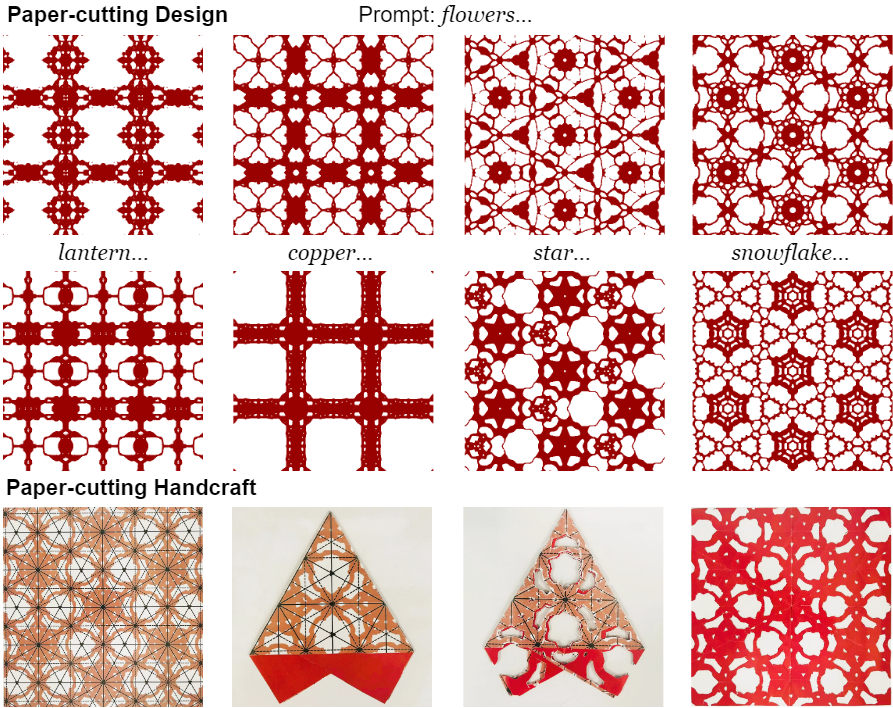 Planar Symmetric Pattern GenerationNing Lin*, Luxi Chen*, Huaguan Chen, Jiacheng Cen, Chongxuan Li, Wenbing Huang, and Hao SunIn The Forty-third International Conference on Machine Learning, 2026
Generating objects with specific symmetries is essential in various real-world scenarios. However, adapting existing 2D continuous representations to enforce planar group symmetry remains a challenge, as the transformation of non-reflective group elements may disrupt continuity. To overcome this limitation, we propose a symmetrization framework for arbitrary planar groups. Our method transforms any 2D continuous representation into a symmetric one while preserving continuity. We provide the mathematical formulation of this representation, demonstrate its approximation capability for symmetric functions, and detail the construction methodology. We validate our approach through three visual design tasks (pattern design, paper-cutting design and stylized topology design) and one material design task. Experiments confirm that our representation enables effective symmetry control and demonstrate its broader applicability.
- arxiv
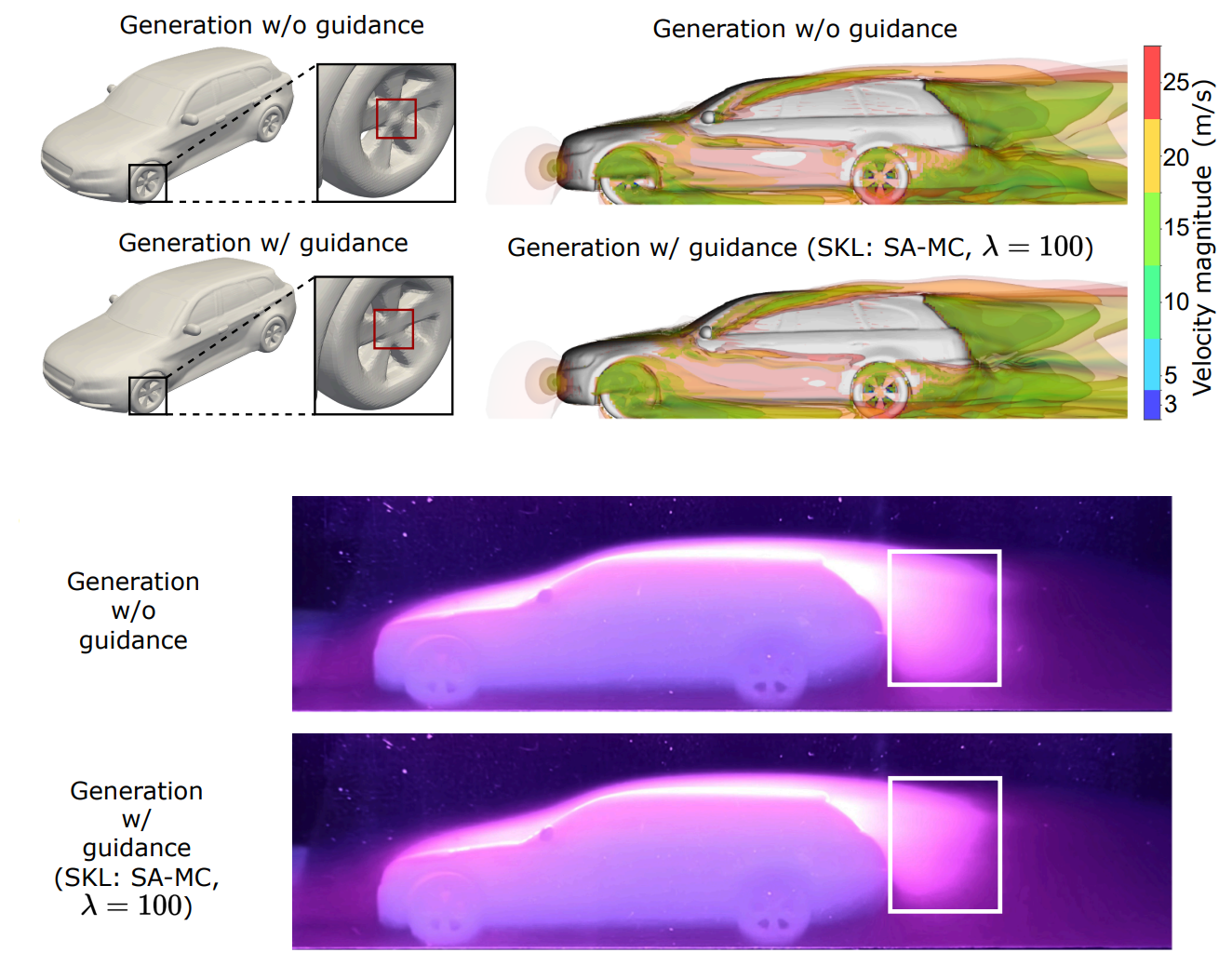 Optimization and Generation in Aerodynamics Inverse DesignHuaguan Chen*, Ning Lin*, Luxi Chen*, Rui Zhang, Wenbing Huang, Chongxuan Li, and Hao SunarXiv preprint arXiv:2602.03582, 2026
Aerodynamic inverse design can improve vehicle and aircraft efficiency, but practical design rarely seeks performance alone: vehicle refinement must reduce drag while preserving visual features linked to design language, brand recognition and user perception. Traditional CFD-driven optimization is accurate but slow for broad exploration, and current learning-based methods are still largely performance-driven and lack a coherent target linking optimization, generation and visual consistency. Here we formulate visual preservation and aerodynamic improvement as one probability target. Designs consistent with a reference shape or view define a learned visual design distribution, which is reweighted by aerodynamic cost. Optimization then refines an initial geometry toward a low-cost, high-probability design, whereas guided generation samples lower-cost 3D candidates from the same input view. OpenFOAM evaluation shows that visual-feature-preserving optimization reduces vehicle drag by 5.8% relative to the initial vehicle and reduces the best valid aircraft drag-to-lift objective by 28.8% relative to the initial aircraft while preserving input visual features. For view-based generation, guidance reduces vehicle drag by 3.0% and the aircraft drag-to-lift objective by 68.6% relative to direct generation from the same view, while maintaining visual consistency. Wind-tunnel tests with 3D-printed vehicle prototypes provide an independent wake-level check, and controlled analyses explain the distributional mechanisms behind these results. This work provides a probabilistic foundation and practical route for visual-feature-preserving aerodynamic refinement and early-stage 3D design exploration.
2025
- NeuriPS 2025
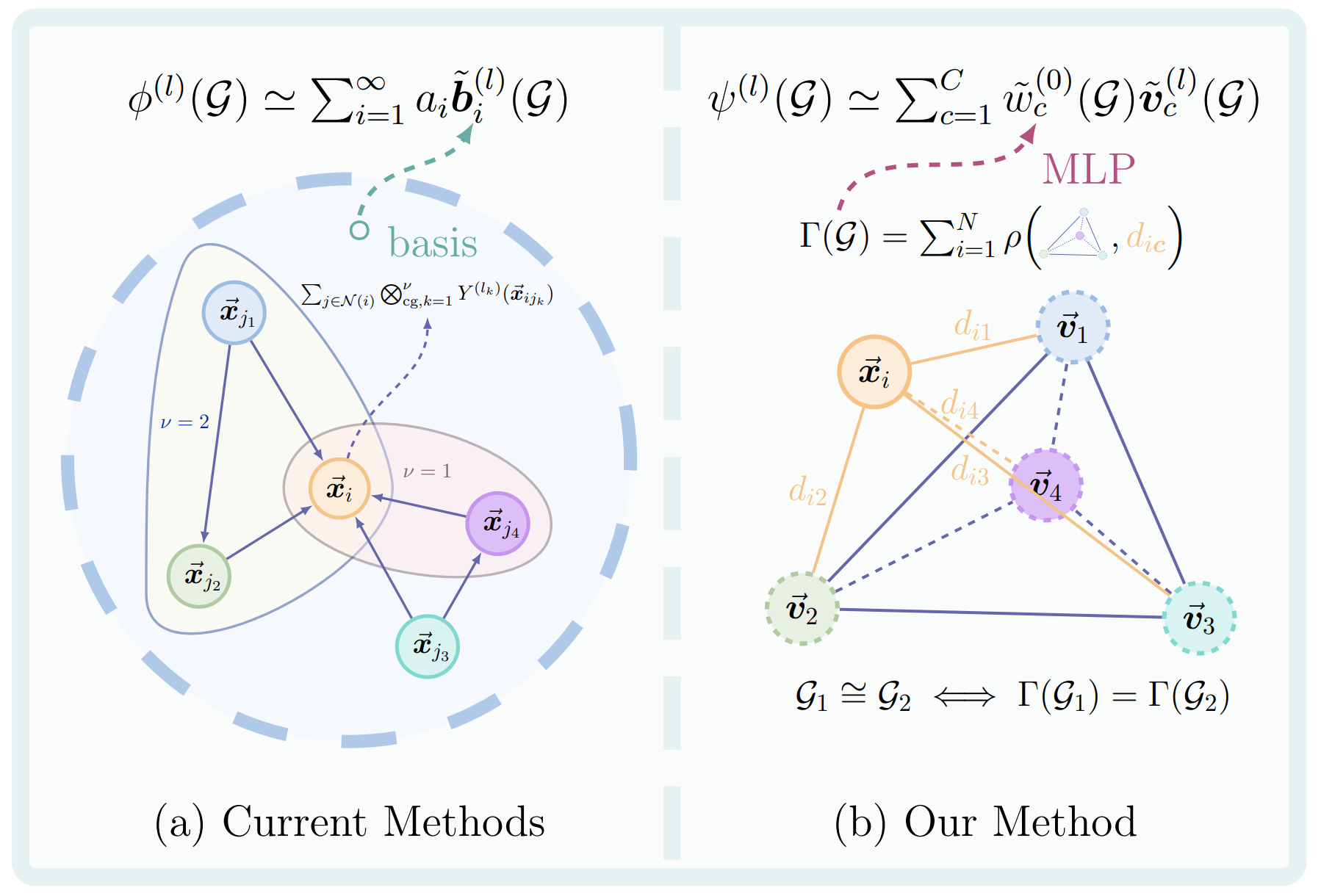 Universally invariant learning in equivariant GNNsJiacheng Cen, Anyi Li, Ning Lin, Tingyang Xu, Yu Rong, Deli Zhao, Zihe Wang, and Wenbing HuangAdvances in Neural Information Processing Systems, 2025
Equivariant Graph Neural Networks (GNNs) have demonstrated significant success across various applications. To achieve completeness – that is, the universal approximation property over the space of equivariant functions – the network must effectively capture the intricate multi-body interactions among different nodes. Prior methods attain this via deeper architectures, augmented body orders, or increased degrees of steerable features, often at high computational cost and without polynomial-time solutions. In this work, we present a theoretically grounded framework for constructing complete equivariant GNNs that is both efficient and practical. We prove that a complete equivariant GNN can be achieved through two key components: 1) a complete scalar function, referred to as the canonical form of the geometric graph; and 2) a full-rank steerable basis set. Leveraging this finding, we propose an efficient algorithm for constructing complete equivariant GNNs based on two common models: EGNN and TFN. Empirical results demonstrate that our model demonstrates superior completeness and excellent performance with only a few layers, thereby significantly reducing computational overhead while maintaining strong practical efficacy.
- SIGKDD 2025
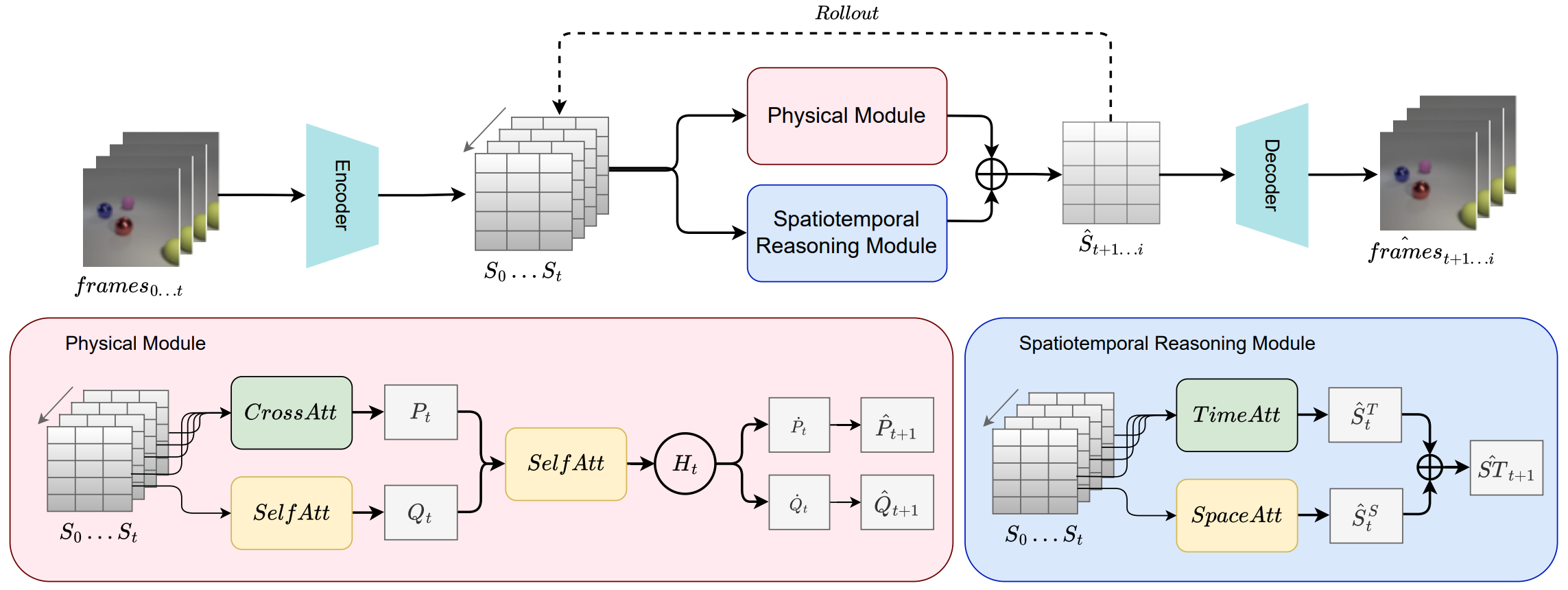 SlotPi: Physics-informed Object-centric Reasoning ModelsJian Li, Han Wan, Ning Lin, Yu-Liang Zhan, Ruizhi Chengze, Haining Wang, Yi Zhang, Hongsheng Liu, Zidong Wang, Fan Yu, and Hao SunIn Proceedings of the 31st ACM SIGKDD Conference on Knowledge Discovery and Data Mining V. 2, 2025
Understanding and reasoning about dynamics governed by physical laws through visual observation, akin to human capabilities in the real world, poses significant challenges. Currently, object-centric dynamic simulation methods, which emulate human behavior, have achieved notable progress but overlook two critical aspects: 1) the integration of physical knowledge into models. Humans gain physical insights by observing the world and apply this knowledge to accurately reason about various dynamic scenarios; 2) the validation of model adaptability across diverse scenarios. Real-world dynamics, especially those involving fluids and objects, demand models that not only capture object interactions but also simulate fluid flow characteristics. To address these gaps, we introduce SlotPi, a slot-based physics-informed object-centric reasoning model. SlotPi integrates a physical module based on Hamiltonian principles with a spatio-temporal prediction module for dynamic forecasting. Our experiments highlight the model’s strengths in tasks such as prediction and Visual Question Answering (VQA) on benchmark and fluid datasets. Furthermore, we have created a real-world dataset encompassing object interactions, fluid dynamics, and fluid-object interactions, on which we validated our model’s capabilities. The model’s robust performance across all datasets underscores its strong adaptability, laying a foundation for developing more advanced world models.
- arxiv
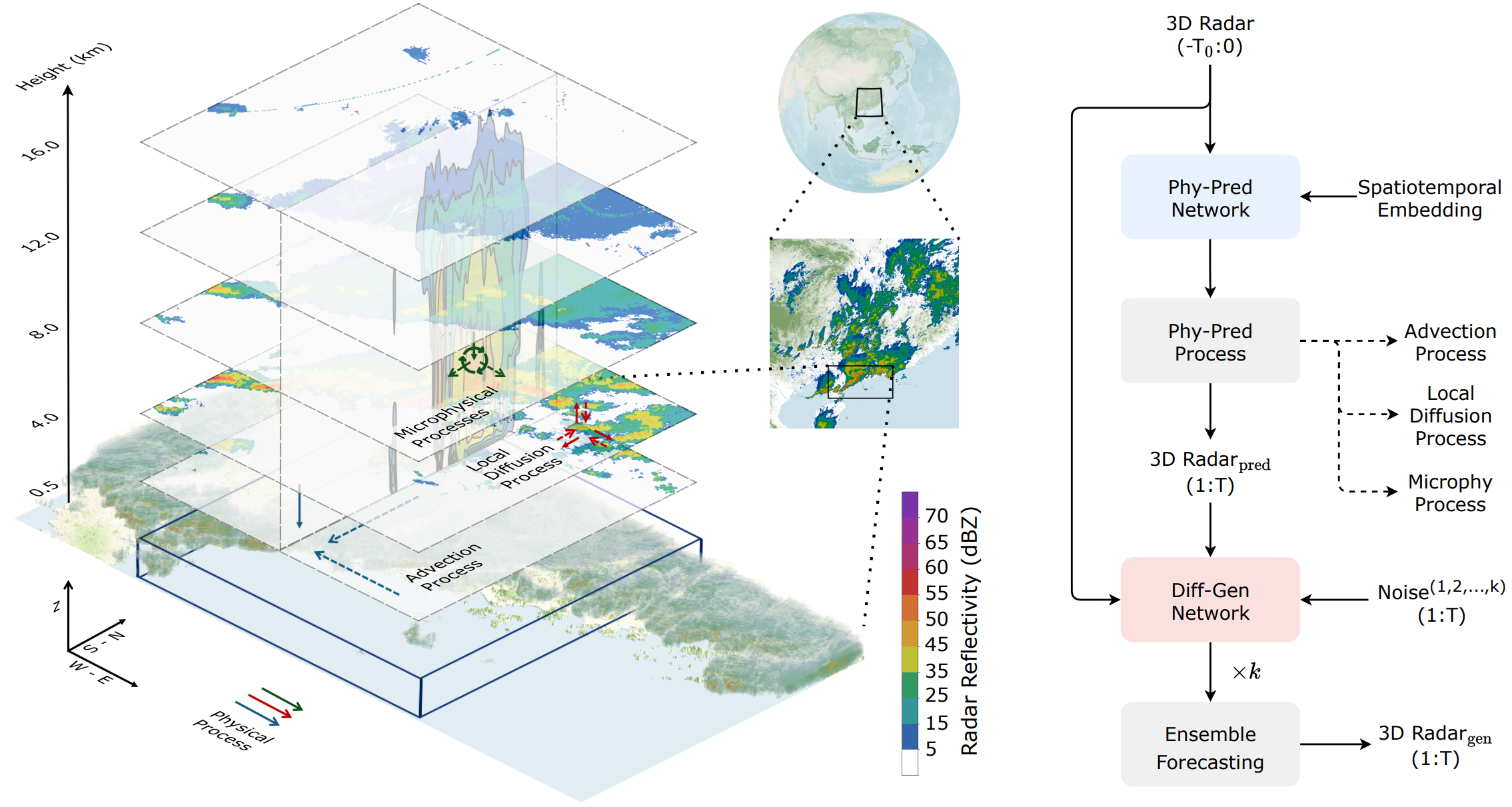 Nowcast3D: Reliable precipitation nowcasting via gray-box learningHuaguan Chen, Wei Han, Haofei Sun, Ning Lin, Xingtao Song, Yunfan Yang, Jie Tian, Yang Liu, Ji-Rong Wen, Xiaoye Zhang, Xueshun Shen, and Hao SunarXiv preprint arXiv:2511.04659, 2025
Reliable nowcasting of extreme precipitation remains difficult because convective systems are strongly nonlinear, multiscale, and nonstationary in 3D. Radar is the backbone of nowcasting, yet existing methods struggle to predict extremes: physics-based extrapolation cannot capture growth and decay, deterministic learning tends to oversmooth and underestimate peaks, and purely generative models often lack physical consistency. Hybrid schemes help but are mostly limited to 2D composite reflectivity, collapsing the atmosphere into one layer and discarding vertical structure critical for height-dependent dynamics. We introduce Nowcast3D, a gray-box, fully 3D framework that works directly on volumetric radar reflectivity. The end-to-end model couples physically constrained neural operators (advection, local diffusion, and microphysics) with a conditional diffusion model to generate ensemble forecasts with quantified uncertainty. Trained on provincial-scale 3D volumes over a 10.24° × 10.24° region and fine-tuned on a 2.56° × 2.56° city region (0.01° ≈ 1 km), Nowcast3D provides near-real-time forecasts up to 3 h and outperforms competitive baselines in cross-region and temporal out-of-sample tests. It can also infer wind fields without labeled supervision, supporting physically plausible transport. In a nationwide blind evaluation by 160 meteorologists, Nowcast3D ranked first and was preferred in 57% of post-hoc assessments, surpassing the leading baseline (27%). These results highlight its reliability and operational value for extreme precipitation nowcasting.
2024
- NeuriPS 2024
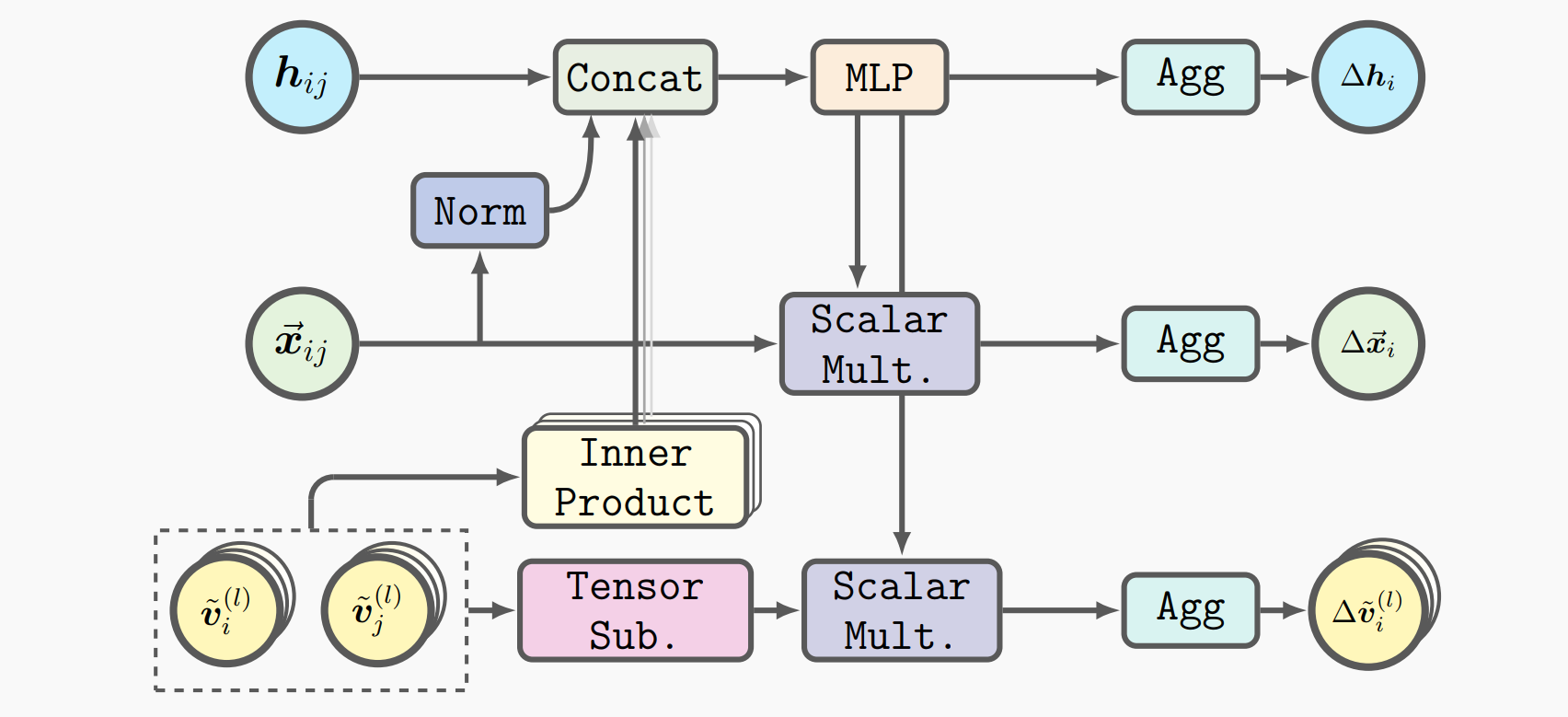 Are high-degree representations really unnecessary in equivariant graph neural networks?Jiacheng Cen, Anyi Li, Ning Lin, Yuxiang Ren, Zihe Wang, and Wenbing HuangAdvances in Neural Information Processing Systems, 2024
Equivariant Graph Neural Networks (GNNs) that incorporate E(3) symmetry have achieved significant success in various scientific applications. As one of the most successful models, EGNN leverages a simple scalarization technique to perform equivariant message passing over only Cartesian vectors (i.e., 1st-degree steerable vectors), enjoying greater efficiency and efficacy compared to equivariant GNNs using higher-degree steerable vectors. This success suggests that higher-degree representations might be unnecessary. In this paper, we disprove this hypothesis by exploring the expressivity of equivariant GNNs on symmetric structures, including k-fold rotations and regular polyhedra. We theoretically demonstrate that equivariant GNNs will always degenerate to a zero function if the degree of the output representations is fixed to 1 or other specific values. Based on this theoretical insight, we propose HEGNN, a high-degree version of EGNN to increase the expressivity by incorporating high-degree steerable vectors while maintaining EGNN’s efficiency through the scalarization trick. Our extensive experiments demonstrate that HEGNN not only aligns with our theoretical analyses on toy datasets consisting of symmetric structures, but also shows substantial improvements on more complicated datasets such as N-body and MD17. Our theoretical findings and empirical results potentially open up new possibilities for the research of equivariant GNNs.
2023
- ACM-MM 2023
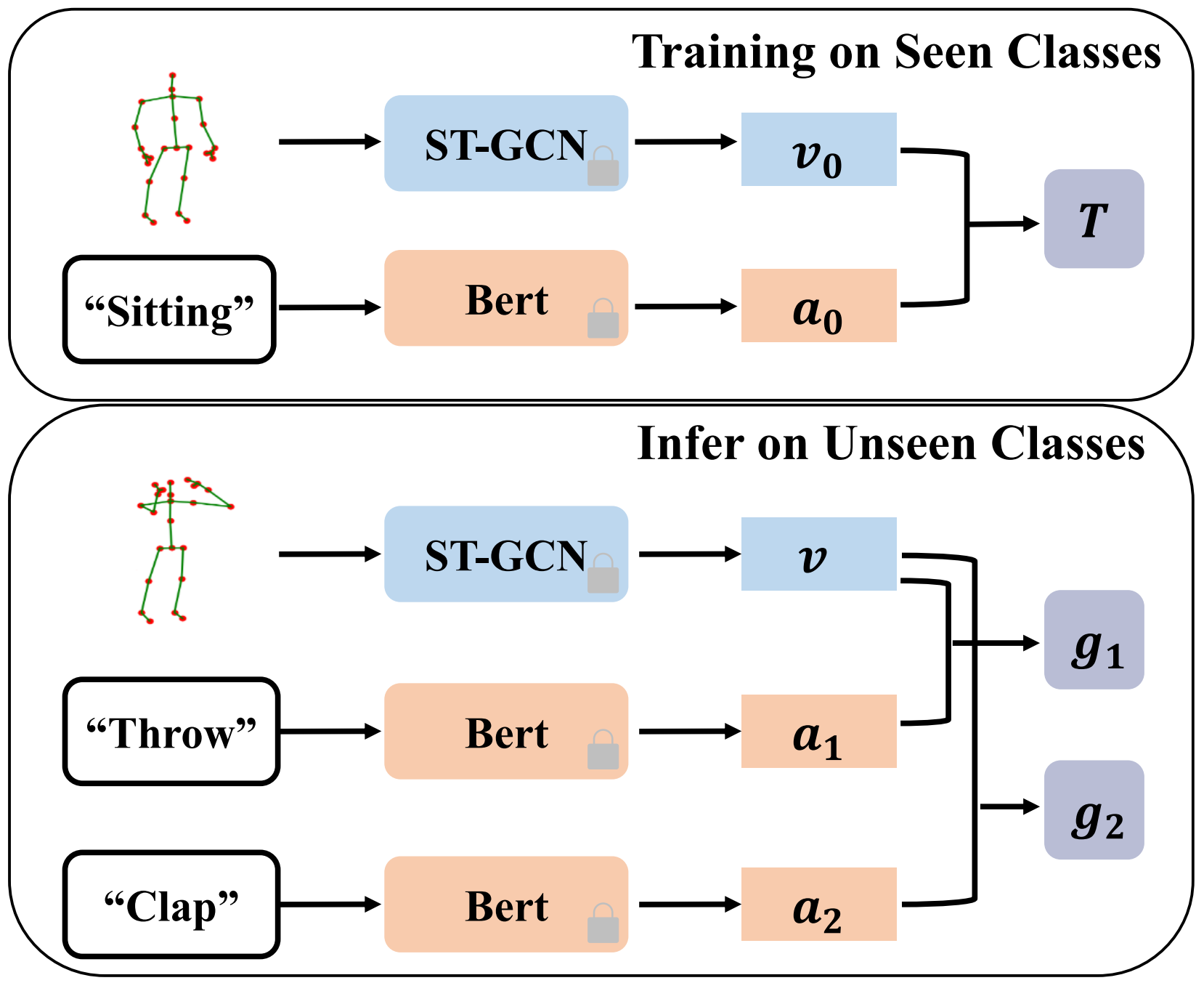 Zero-shot skeleton-based action recognition via mutual information estimation and maximizationYujie Zhou, Wenwen Qiang, Anyi Rao, Ning Lin, Bing Su, and Jiaqi WangIn Proceedings of the 31st ACM international conference on multimedia, 2023
Zero-shot skeleton-based action recognition aims to recognize actions of unseen categories after training on data of seen categories. The key is to build the connection between visual and semantic space from seen to unseen classes. Previous studies have primarily focused on encoding sequences into a singular feature vector, with subsequent mapping the features to an identical anchor point within the embedded space. Their performance is hindered by 1) the ignorance of the global visual/semantic distribution alignment, which results in a limitation to capture the true interdependence between the two spaces. 2) the negligence of temporal information since the frame-wise features with rich action clues are directly pooled into a single feature vector. We propose a new zero-shot skeleton-based action recognition method via mutual information (MI) estimation and maximization. Specifically, 1) we maximize the MI between visual and semantic space for distribution alignment; 2) we leverage the temporal information for estimating the MI by encouraging MI to increase as more frames are observed. Extensive experiments on three large-scale skeleton action datasets confirm the effectiveness of our method.